
Last updated November 15, 2026
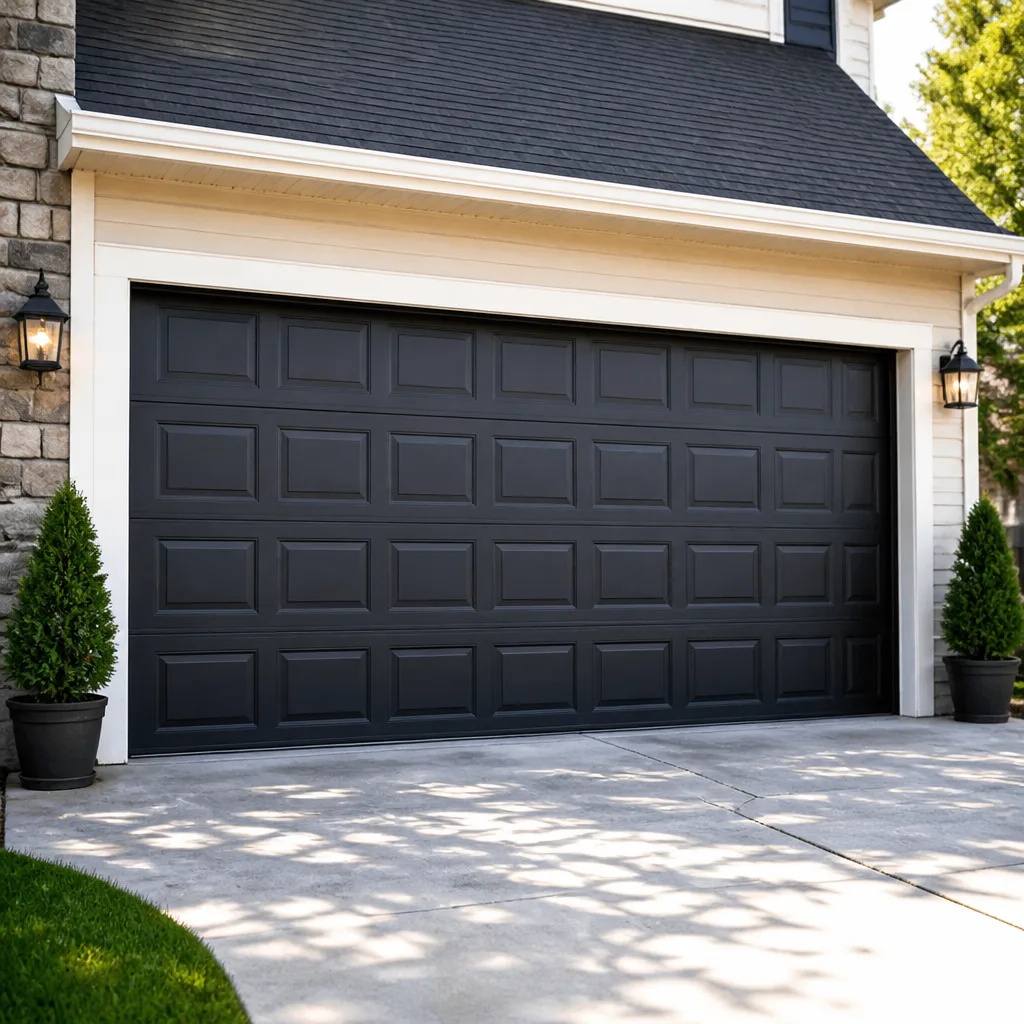 Raised-panel steel
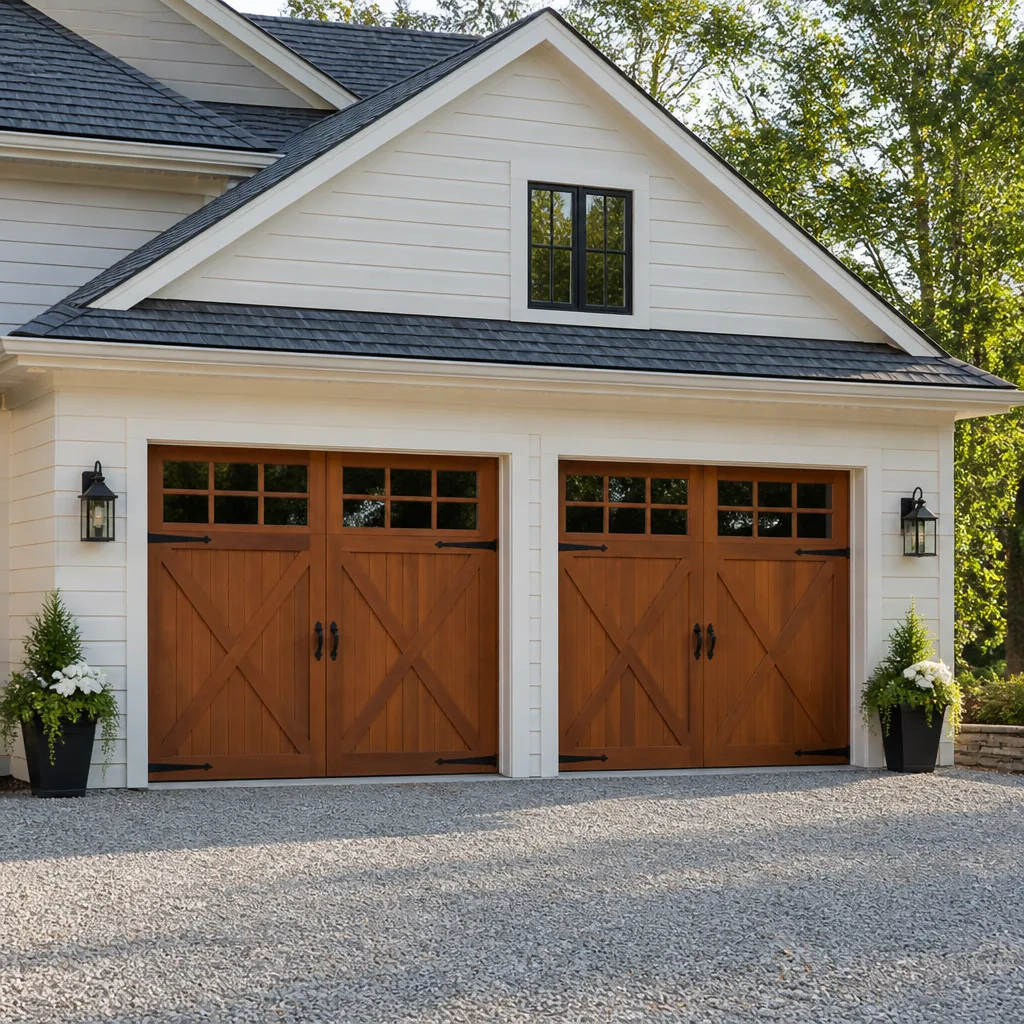 Carriage house
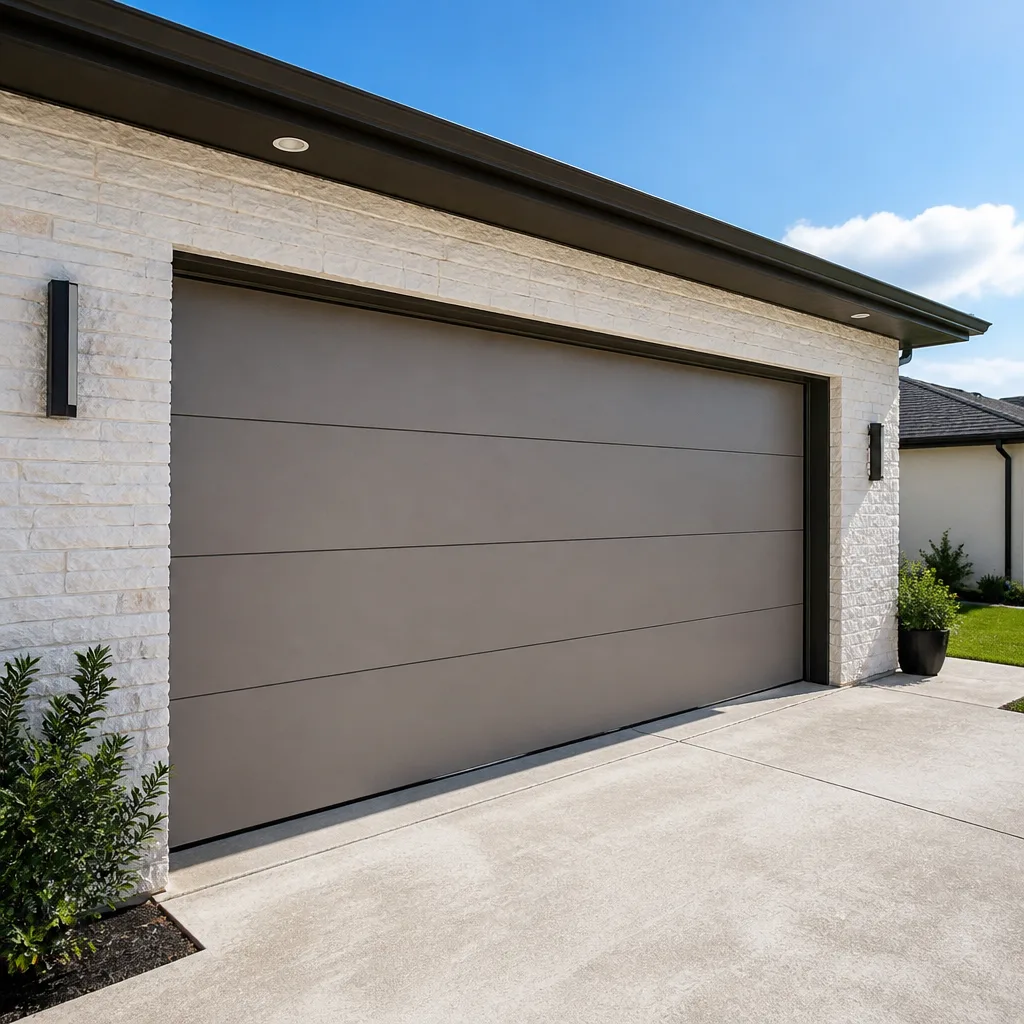 Modern flush
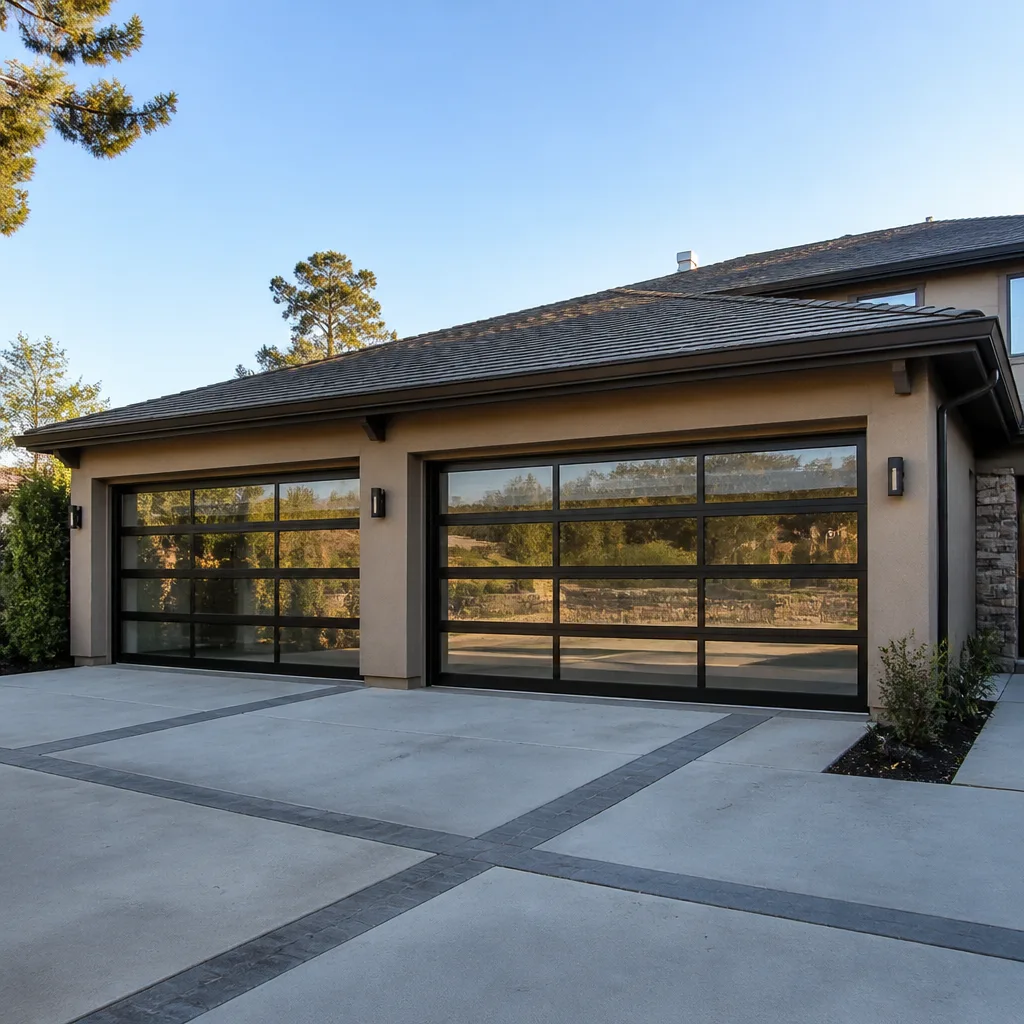 Full-view glass
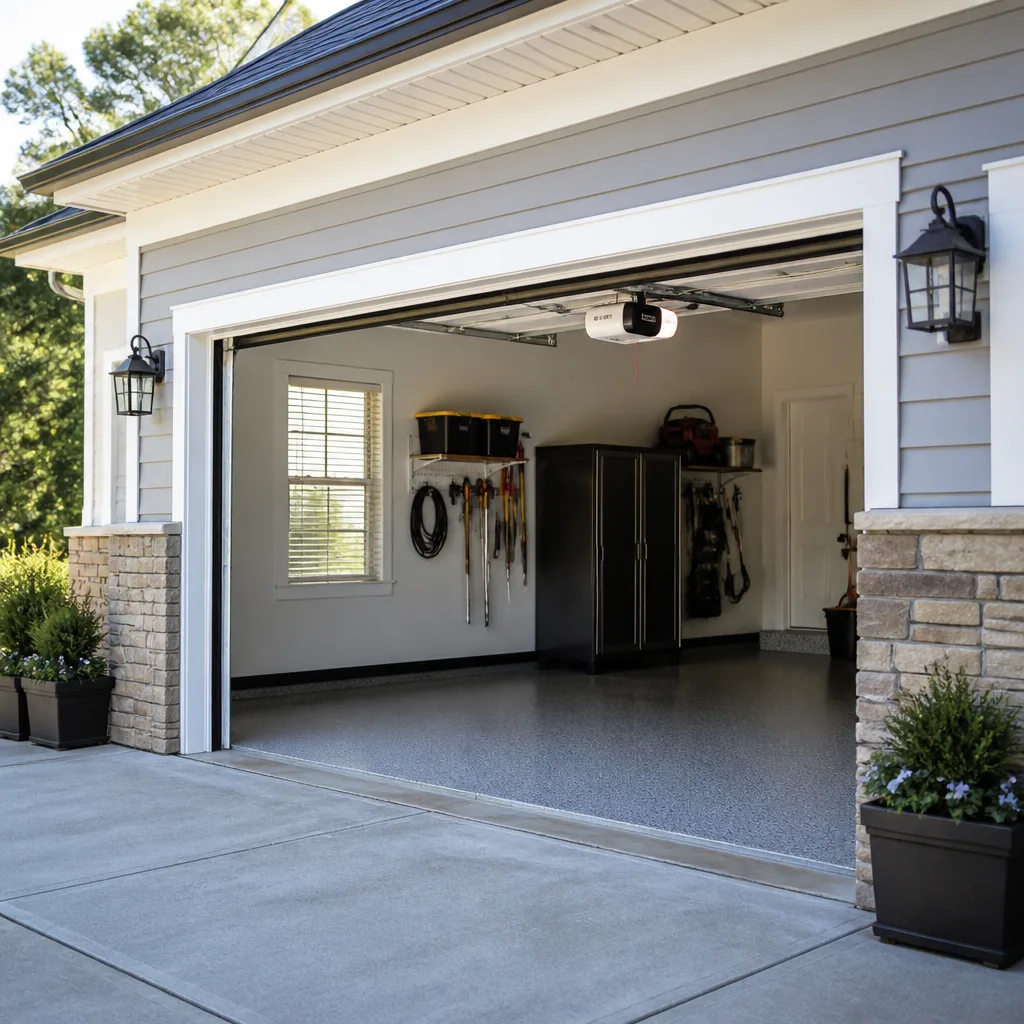 LiftMaster openers
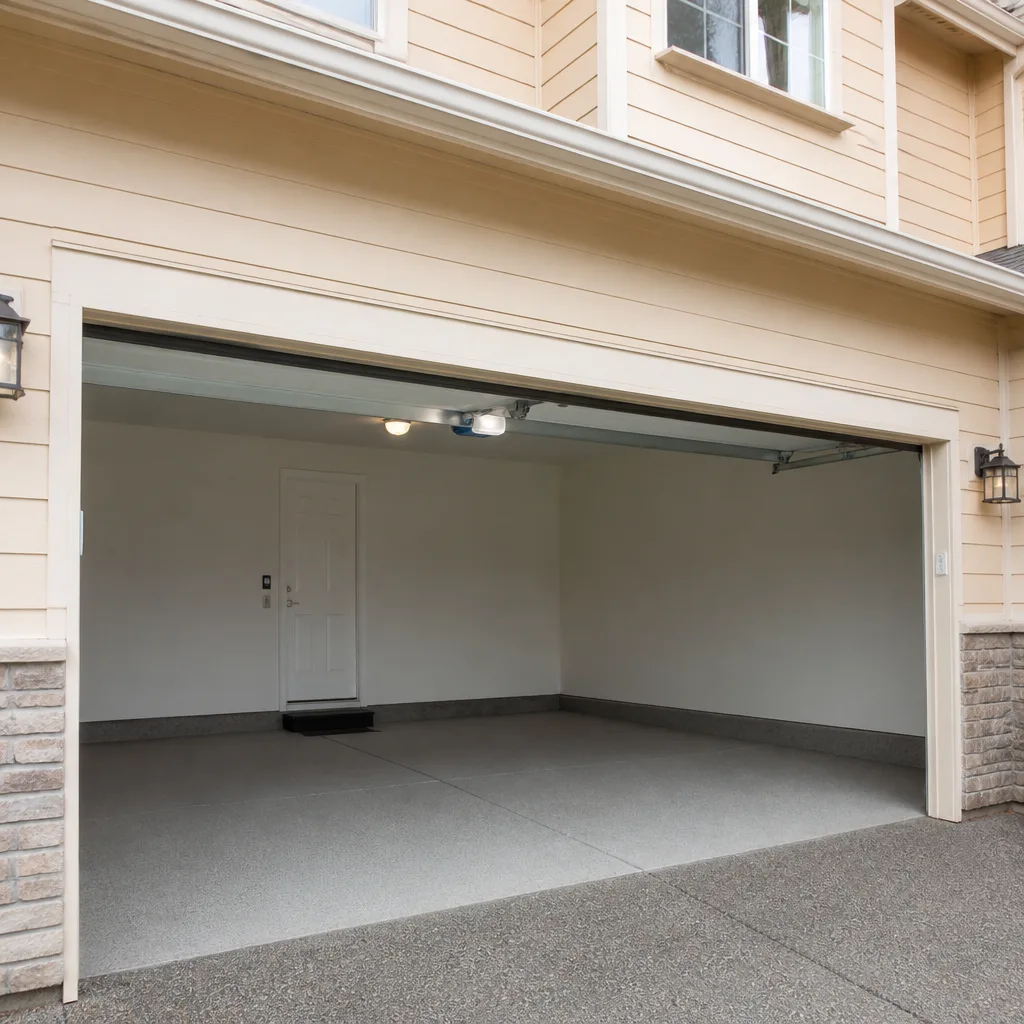 Chamberlain openers
Full 25-point door and opener safety check with every visit - springs, cables, rollers, tracks, and your LiftMaster or Chamberlain opener included
You get a price before we start. It does not change when the pro arrives.
Get your free estimateSeasonal Garage Door Care for Providence: Year-Round Homeowner’s Guide
October is when you should be thinking about your garage door, not January. By the time the first hard freeze settles over Providence, a tired torsion spring is already stressed, a bottom seal is already cracked, and a track has already shifted a little more than it should have. Most winter breakdowns we see started as small problems nobody looked at in the fall. Garage doors in Rhode Island don’t fail because of one dramatic event. They fail because four distinct seasons each put a different kind of wear on the same mechanical system, and most homeowners only pay attention once something stops working. This guide maps specific checks to specific months based on how this climate actually behaves, so you can catch problems before they turn into a Sunday morning call.
Quick Answer
Seasonal garage door care in Providence means focusing on different tasks at different times of year: lubricate and inspect springs and seals in October and November before the first freeze, check tracks and hardware in March after winter freeze-thaw damage, watch torsion spring tension and opener motor strain through July and August heat, and clear and clean tracks again in late spring before humidity swells wood and slows rollers. The homeowners who avoid expensive emergency repairs are the ones who do a 15-minute check each season, not the ones who wait for a strange noise.
Styles & brands we work with
- Raised-panel steel
- Carriage house
- Modern flush
- Full-view glass
- LiftMaster openers
- Chamberlain openers
Table of Contents
- Why Providence Weather Wears Garage Doors Differently
- Fall Prep: The October-November Window That Prevents Most Winter Failures
- How Freeze-Thaw Cycling Stresses Seals, Tracks, and Cable Drums
- Spring Inspection Priorities After a New England Winter
- Summer Heat and Torsion Spring Tension
- Building a 15-Minute Seasonal Check That Actually Gets Done
- Seasonal Reference Card: Task by Task, Season by Season
- Common Mistakes to Avoid
Why Providence Weather Wears Garage Doors Differently
Providence sits in a climate zone with real winters and genuinely humid summers, and that combination is harder on a garage door than a place that stays cold or stays warm all year. A garage door is a large moving assembly of steel, aluminum, wood, rubber, and springs, and each of those materials responds to temperature and moisture differently. When they’re bolted together into one system, the mismatched expansion and contraction becomes the source of most problems.
Think about what a typical year looks like here. October mornings near 40 degrees slide into 70-degree afternoons. January brings hard overnight freezes followed by above-freezing afternoons that melt snow against the door. July pushes garage interiors past 90 degrees when the door faces west and the sun bakes it all afternoon. Each swing between those extremes causes materials to move, and movement over a few thousand cycles is what loosens bolts, stretches cables, and hardens rubber seals.
The homes across Providence’s neighborhoods add another layer. Many older garages in the East Side and Federal Hill were built with wood-frame doors or wood-paneled sections that absorb and release moisture through the year. Newer construction in neighborhoods like Wayland and the edges of the city often uses steel or aluminum doors with factory seals that are tighter and more sensitive to track misalignment. The right seasonal care depends partly on what you have.
What we see in the field is that failures cluster at the transition points, not mid-season. Late November and late March, when freeze-thaw is most active, and late August, when the cumulative heat has finished off a worn spring. Timing your checks around those windows is more useful than random maintenance.
Fall Prep: The October-November Window That Prevents Most Winter Failures
The most valuable two hours you’ll spend on your garage door this year are in late October or early November. That’s the window when the weather is still workable, the days are long enough to see what you’re doing, and the first hard freeze hasn’t yet put your system under its real load. Delay this work to December and you’ll be doing it in the cold on a door that’s already under stress.
Here’s what fall preparation involves for a Providence home:
- Lubricate rollers, hinges, and tracks. Use a silicone-based or lithium grease, not WD-40 or general household oil, which attracts grit and hardens in cold weather. A few drops on each hinge pivot and a light film on the rollers makes a real difference once temperatures drop.
- Check the bottom weather seal. Run your hand along the bottom rubber. If it’s cracked, hardened, or visibly missing chunks, replace it before winter. A failing seal lets cold air under the door, which raises the load on the opener and lets snowmelt creep onto the garage floor.
- Test the balance of the door. Disconnect the opener and lift the door by hand. It should rise smoothly and stay open about three or four feet up. If it drops or feels heavy, a spring is losing tension and needs a professional look.
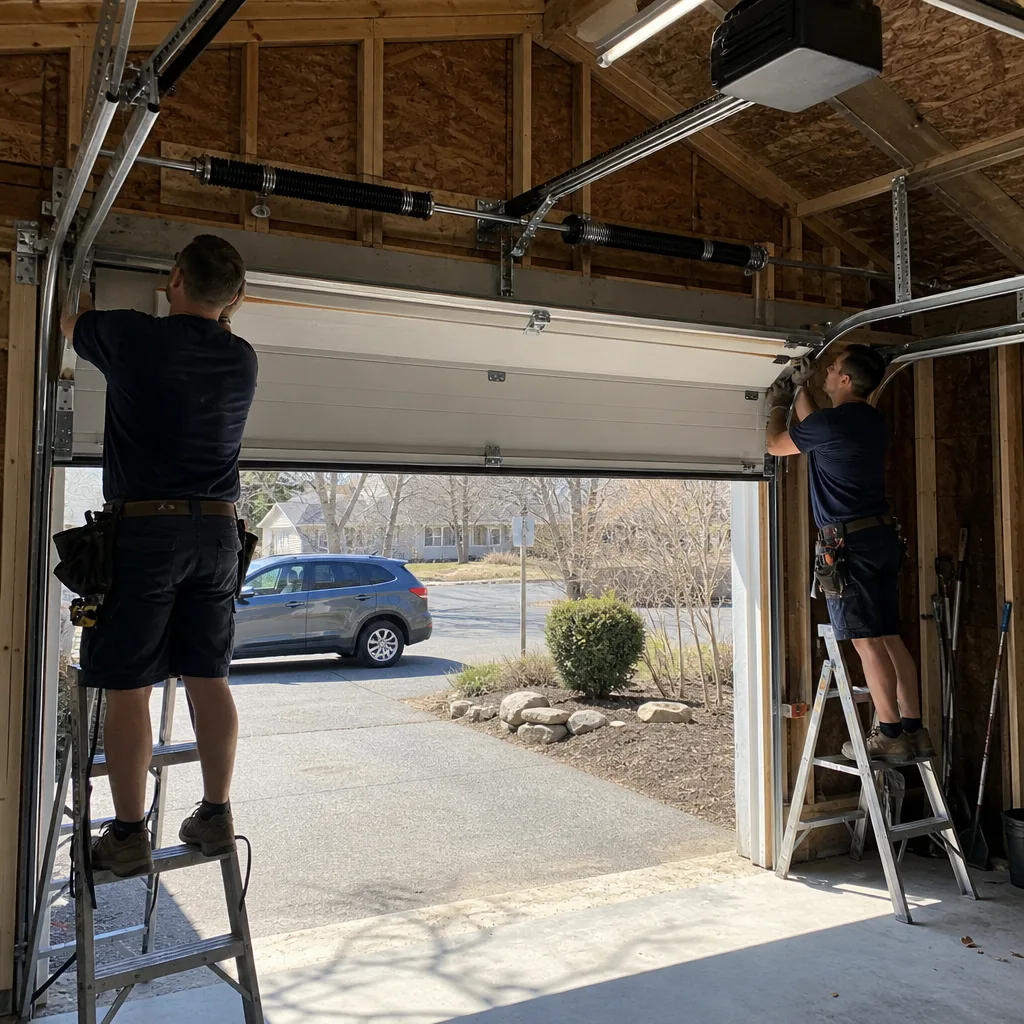
- Inspect the spring and cables visually. Look for gaps or visible rust in the torsion spring, and check that cables are taut and seated in their drums. Do not attempt to adjust either yourself. Call a trained technician.
- Check the safety sensors. Wipe them clean and confirm the door reverses when you pass an object in front of the beam. Ice and snow can obscure them, and a confused sensor is one of the most common reasons a door won’t close in January.
- Test the auto-reverse feature. Place a piece of wood flat on the ground in the door’s path and close the door. It should stop and reverse immediately.
- Tighten visible hardware. Run a wrench over the bolts on the hinges and the track brackets. Cold contracts metal, and small looseness in fall becomes rattling in winter.
Lubrication and spring tension checks in this window catch most of what would otherwise become mid-winter failures. Once you’re past the first hard freeze, lubricant is harder to apply effectively and any spring issue becomes an urgent repair rather than a scheduled one.
How Freeze-Thaw Cycling Stresses Seals, Tracks, and Cable Drums
Freeze-thaw cycling is the specific winter stress here that a consistently cold climate doesn’t produce. In a place where temperatures stay below freezing all winter, materials get cold and stay cold. In Providence, the temperature crosses the freezing point repeatedly, often multiple times in a week, and each crossing makes a small deposit or withdrawal from the system’s resilience.
The bottom seal takes the worst of it. Water wicks into any crack in the rubber, then expands when it freezes. Overnight that expansion forces the crack wider. By afternoon the ice melts, the water goes deeper, and the cycle repeats. Over a single Providence winter, a seal that looked fine in November can be split and ineffective by March. The same water gets between the door panels if you have a wood door, swelling joints and pulling paint from within.
Tracks suffer differently. Metal contracts in cold and expands in warmth, and the brackets that anchor the tracks to the wall travel with the concrete as it moves. Steel tracks that were perfectly vertical in October can be a millimeter or two out of alignment by February. The door still opens, but rollers drag, the opener works harder, and you hear it. Left alone, that drift becomes a bent track or a popped cable.
Cable drums are the least visible and the highest risk. The cables spool into the drums under significant tension. Cold makes them slightly less flexible, and the repeated freeze-thaw of the drum housing can allow small slack to appear. If a cable jumps its drum while the door is operating, the result is a sudden drop on one side and potentially bent panels. That’s a scenario worth avoiding.
What we watch for in Providence through January and February: drag in the first third of the door’s travel, a bottom seal that no longer contacts the floor evenly, and a slight squeal from the drums. Any of these mean the freeze-thaw cycle is doing damage and it’s time for a professional inspection.
Spring Inspection Priorities After a New England Winter
The first warm days in Providence are the moment to walk around your garage door and give it a proper look, before the humidity of late spring and summer starts swelling wood panels and slowing the whole system. Winter has done its work, and either the system came through in good shape or it has developed issues that only show up once the load changes.
These are the priorities, in order:
- Test the door balance again. Disconnect the opener and lift. If the door feels heavier than it did in fall, the torsion spring has lost tension over the winter. A loss of tension is normal wear, not a failure, but the door needs adjustment before it becomes a problem.
- Inspect the bottom seal carefully. Look for splits, deformation, and any loss of contact with the floor. If you have a garage with a sloped floor drain, make sure the seal is still doing its job across the whole width.
- Check wood or wood-composite panels for swelling. Press on the panels at the corners and look for joints that have opened. Wood that absorbed winter moisture will swell when the humidity rises in May and June, and swollen panels can bind in the tracks.
- Look at the tracks for drift. Stand inside the garage and sight the track lines against the door frame. Bends or bowing are visible from a distance. Also check the vertical tracks for any play in the brackets.
- Clean and lubricate the tracks and rollers. Winter grit and dried salt (from melting road snow on your car) accumulate on the tracks. Wipe them down and re-lubricate before summer.
- Test the opener’s force adjustment. The opener may have auto-adjusted or been manually set during winter. Confirm the door closes firmly but doesn’t slam, and reverses on contact with an object.
- Check the safety sensors again. Winter ice damage or displacement often only becomes obvious in spring.
For homes with a Raynor or Clopay wood-paneled door, the panel inspection matters more than anything else on the list. Swollen panels are the entry point for the biggest repair bills. If you’re seeing joints that have opened or panel edges that no longer sit flush, have a professional look before the humidity peaks.
Summer Heat and Torsion Spring Tension
Heat does its own kind of damage, and it does it slowly enough that many homeowners only notice in August when something fails. High garage temperatures in Providence typically get worse than the outdoor temperature. A west-facing garage with a dark door and no ventilation can be 15 to 20 degrees hotter inside than the shaded air, and that sustained heat load affects the whole system.
Here’s what to watch:
- Torsion spring tension. Steel springs lose a small amount of tension in high heat. The loss is gradual, and the door feels slightly heavier without any obvious event. If your opener is working harder than in May, spring tension is usually why.
- Opener motor performance. Motors run hotter in a hot garage and have to work longer because the door is heavier. Chain and belt drives warm up and can slip or strain. If you have a LiftMaster or Chamberlain opener with a battery backup, summer is the time to test the battery.
- Roller noise. Nylon rollers soften in heat and can develop flat spots after sitting in one position. Steel rollers expand in heat and can bind in tight tracks.
- Weather seal hardening. The bottom rubber that seemed fine in March bakes through July and hardens. Hardened seals crack when they flex.
- Panel warping on non-insulated doors. A single-panel steel door facing direct sun can warp if it’s not insulated, especially on older doors with minimal backing. Warped panels drag in the tracks and eventually crack.
A simple mid-summer check is worth doing. Listen to the door as it operates. If the opener sounds strained or the door squeaks, lubricate. If the door balances differently than it did in spring, book a spring adjustment. If the opener motor is hot to the touch after a single cycle, that’s normal; if it’s hot after a short cycle, the door load is too high and needs attention.
Building a 15-Minute Seasonal Check That Actually Gets Done
Most garage door maintenance advice fails because it’s too complicated to become a habit. Homeowners read a checklist, do it once, and then forget about it for two years. The trick is to build a short routine you can do in the time it takes to drink a cup of coffee, and to tie it to something already in your calendar.
Here’s a 15-minute version that covers the essentials across all four seasons:
- Open and close the door once, listening. (30 seconds.) Any new sound, drag, or hesitation is a signal.
- Look at the bottom seal. (1 minute.) Check for cracks, missing chunks, and loss of contact with the floor.
- Test the safety sensors. (30 seconds.) Wave an object in front of them and confirm the door reverses.
- Check the balance. (2 minutes.) Disconnect the opener, lift the door by hand, confirm it stays open three or four feet up.
- Lubricate visible moving parts. (4 minutes.) A drop on each hinge, a light film on rollers, and spray the tracks.
- Tighten visible bolts. (2 minutes.) Run a socket over the hinge and bracket bolts.
- Walk around the door and look at it. (3 minutes.) Look for panel damage, track bends, and cable wear.
- Note anything odd. (2 minutes.) Write down what you noticed. If a sound or symptom persists next time, call for an inspection.
Tie this to something in your routine: the first weekend after Labor Day, the weekend before Thanksgiving, the first weekend after the last freeze, and the first weekend in August. Four check-ins per year is all it takes to catch most failures before they become urgent. You can also look at this as a two-tier system: the 15-minute home check every season, plus a professional spring and cable inspection once a year. That second service belongs with a trained technician, not a homeowner, because springs and cables store enough energy to cause serious injury if handled wrong.
Seasonal Reference Card: Task by Task, Season by Season
Keep this one-page reference somewhere you’ll see it: on the inside of the garage door, in your home maintenance file, or wherever you keep service records. It’s the short version of everything this guide covers.
- October-November (Fall prep): Lubricate rollers, hinges, tracks. Replace the bottom seal if it shows cracks. Test door balance. Visually inspect springs and cables. Clean and test safety sensors. Test auto-reverse. Tighten hardware. This is the most important window of the year.
- January-February (Freeze-thaw watch): Listen for drag in the first third of the door’s travel. Look for a bottom seal that no longer contacts the floor evenly. Watch for squealing from the cable drums. Any of these needs a professional visit. Do not adjust springs yourself.
- March-April (Spring inspection): Test door balance again. Inspect the bottom seal for winter damage. Look for swollen wood panels. Sight the tracks for drift. Clean and lubricate the tracks. Test the opener’s force adjustment. Test safety sensors again.
- May-June (Pre-humidity prep): Clean and lubricate tracks before the humid stretch. Confirm wood panels are sealed. Check for any drag as warmer weather builds.
- July-August (Summer heat): Test opener motor performance. Listen for roller noise. Check the bottom seal for heat hardening. Look for panel warping on non-insulated doors. Test backup batteries if you have a LiftMaster or Chamberlain opener with one.
- Year-round: Do the 15-minute check four times a year. Book a professional inspection once a year for spring and cable assessment.
If you can only do one thing all year, make it the fall prep. That’s the single check with the highest return. Everything else is reinforcing the work you do in October and November.
Common Mistakes to Avoid
- Waiting until something breaks. Garage doors give plenty of warning – squeaks, slow starts, visual seal wear – and every one of those signals is a cheaper fix than the failure it precedes. If you’re only calling when the door won’t open, you’re paying for convenience and urgency on work that could have been scheduled.
- Using WD-40 as a lubricant on garage door hardware. It’s a solvent, not a lubricant, and it hardens over time. Use a purpose-made garage door lubricant on hinges and rollers. Using the wrong product leaves tracks dry and rollers noisy.
- Adjusting springs or cables yourself. A torsion spring stores enough energy to cause serious injury. Any work that involves loosening the tension needs a trained technician. This is the single most dangerous thing a homeowner can attempt on a garage door.
- Ignoring small track bends. A track that’s out by a millimeter in October can be out by several millimeters by February after freeze-thaw. Left alone, the door gets harder to operate and eventually won’t close. Small drift is cheap to correct; bent tracks are not.
- Forgetting the bottom seal. The bottom seal is the cheapest part on the door and the one most likely to fail through a Providence winter. A split seal lets water and cold air in, which raises heating costs and stresses everything downstream.
- Skipping the safety sensor check. Safety sensors are the most common single cause of doors that won’t close, and a dirty or misaligned sensor is usually the answer. Testing them four times a year takes a few seconds. Skipping them means discovering the problem when you’re trying to leave.
- Assuming newer homes don’t need this. Newer construction around Providence has tighter tolerances, which means track drift and seal wear are actually more noticeable in performance. A newer door is not automatically a low-maintenance door.
See the difference
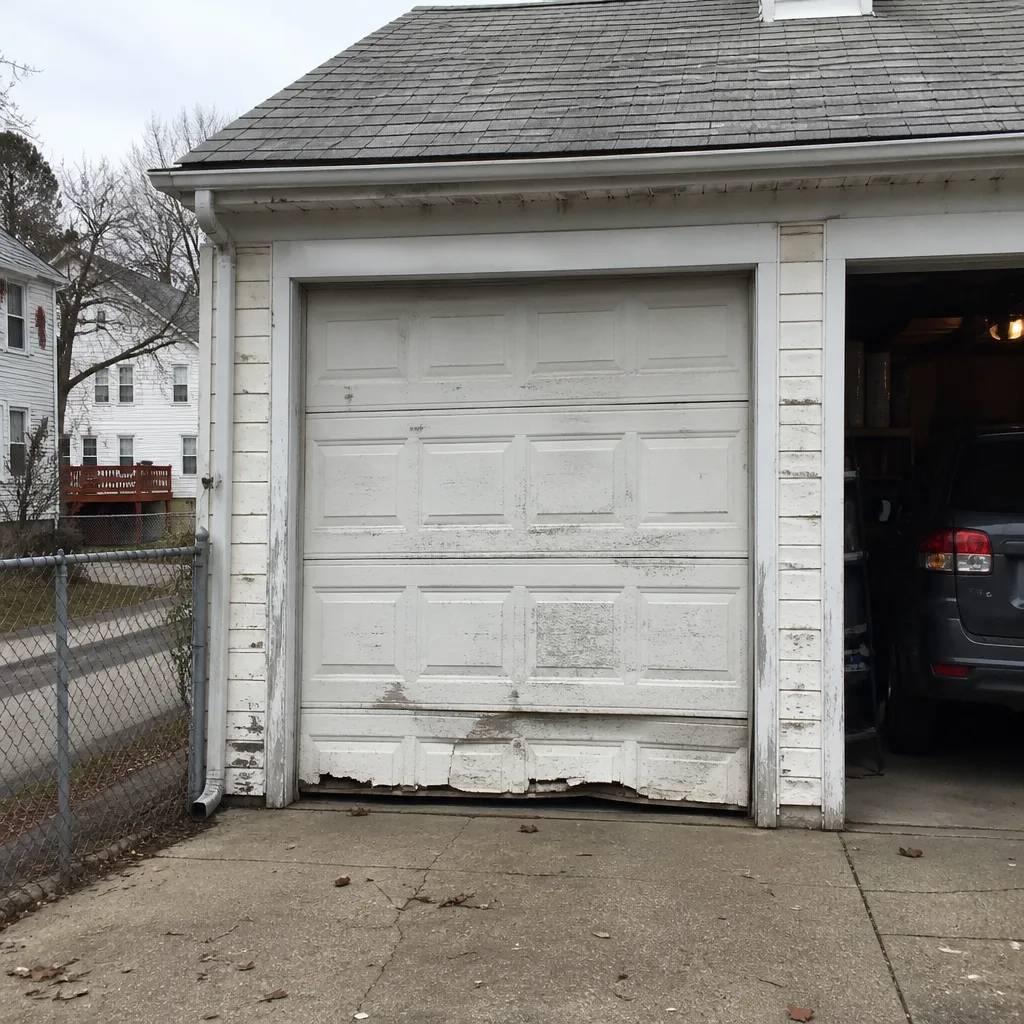 Before
 After
 Before
 After
 Before
 After
When to Call a Professional
Some work belongs to the homeowner and some belongs to a trained technician. Anything involving the torsion spring, the cables, or the drums is on the professional side, full stop. Those parts store significant energy, and getting them wrong can bend the door or cause injury. Call for help if you see a gap in the spring, hear a loud snap and the door won’t lift, notice any cable that has come off its drum, or find a bent track that no amount of tightening corrects. If your door has stopped reversing on contact with an object, that’s also a call, because it’s a safety feature. If your opener runs but the door doesn’t move, or if the door only opens a foot and reverses, call. And if you’ve hit the end of a New England winter and the door still feels heavy after your own inspection, that’s often a spring adjustment, which is quick and cheap when scheduled and expensive when it fails.
Eastwood Garage Door Service offers free estimates in Providence, and we work on what you already have. Call (855) 613-2822. We answer 24/7. Fast dispatch from 7am to 7pm, closed Saturday. Our technicians have up to 11 years of experience, and we’re familiar with LiftMaster, Chamberlain, Genie, Clopay, Amarr, Wayne Dalton, Craftsman, and Raynor systems, so we can evaluate whatever is in your garage without a lengthy brand tutorial. If your issue is door-specific, our garage door repair team handles the diagnosis and the fix; if it’s the opener, our garage door opener repair service covers drive issues across all eight brands.
Frequently Asked Questions
Once a year for a professional spring and cable inspection, plus a 15-minute homeowner check four times a year. Fall is the highest-priority check because it’s the window where lubrication and spring tension catch most winter failures before they start. A yearly professional visit combined with your own quarterly checks covers almost everything.
Bottom seal failure and torsion spring tension loss. The freeze-thaw cycling here puts more stress on the bottom seal than a consistently cold climate does, and the repeated temperature swings wear out spring tension faster. Both are cheap to address in October and expensive to fix in January.
Yes. Lubricating hinges, rollers, and tracks is safe homeowner work, and it’s the single most useful seasonal task. Use a silicone-based or lithium grease, not WD-40. Anything involving the springs, cables, or drums is not homeowner work and should go to a technician.
Yes, mainly through heat-related spring tension loss, opener motor strain, and hardening of the bottom seal. A west-facing garage can get 15 to 20 degrees hotter inside than the outside air, which is enough to affect a door’s performance. A mid-summer check catches the changes before they compound.
Cold thickens lubricant, contracts metal, and stiffens rubber. The door is working harder in winter, and the sound you hear is the door’s moving parts operating under more resistance. If the sound includes a squeal or a grind, rather than just a slightly heavier hum, that’s a signal that something needs attention rather than just cold-weather noise.
No. A spring that has lost significant tension will eventually fail, and spring failure can bring the door down hard. If your door feels heavy in the balance test or your opener is doing unusual work to lift it, book a spring inspection. Postponing turns what would have been a scheduled spring adjustment into a full replacement, sometimes with panel damage.
Ready to schedule a check before the next season turns? Call (855) 613-2822 for a free estimate. We work across Providence and handle the whole system, door and opener together, so a single call covers whatever you find. If you’re not sure whether the problem is the door or the opener, our Eastwood Garage Door Service team can run through a quick phone diagnosis before scheduling.
The Bottom Line
Providence’s four seasons each stress a different part of your garage door, and the homeowners who avoid emergency repair bills are the ones who do seasonal checks on the right schedule. Fall prep in October and November is the single highest-value window. Freeze-thaw watch through January and February catches seal, track, and cable damage early. Spring inspection in March and April reverses winter wear before humidity hits. Summer checks catch heat-related spring tension loss and opener strain. Add a 15-minute quarterly check to your routine and book a professional spring and cable inspection once a year, and you’ll spend far less time and money on garage door problems than your neighbors.
Written by the team at Eastwood Garage Door Service.