
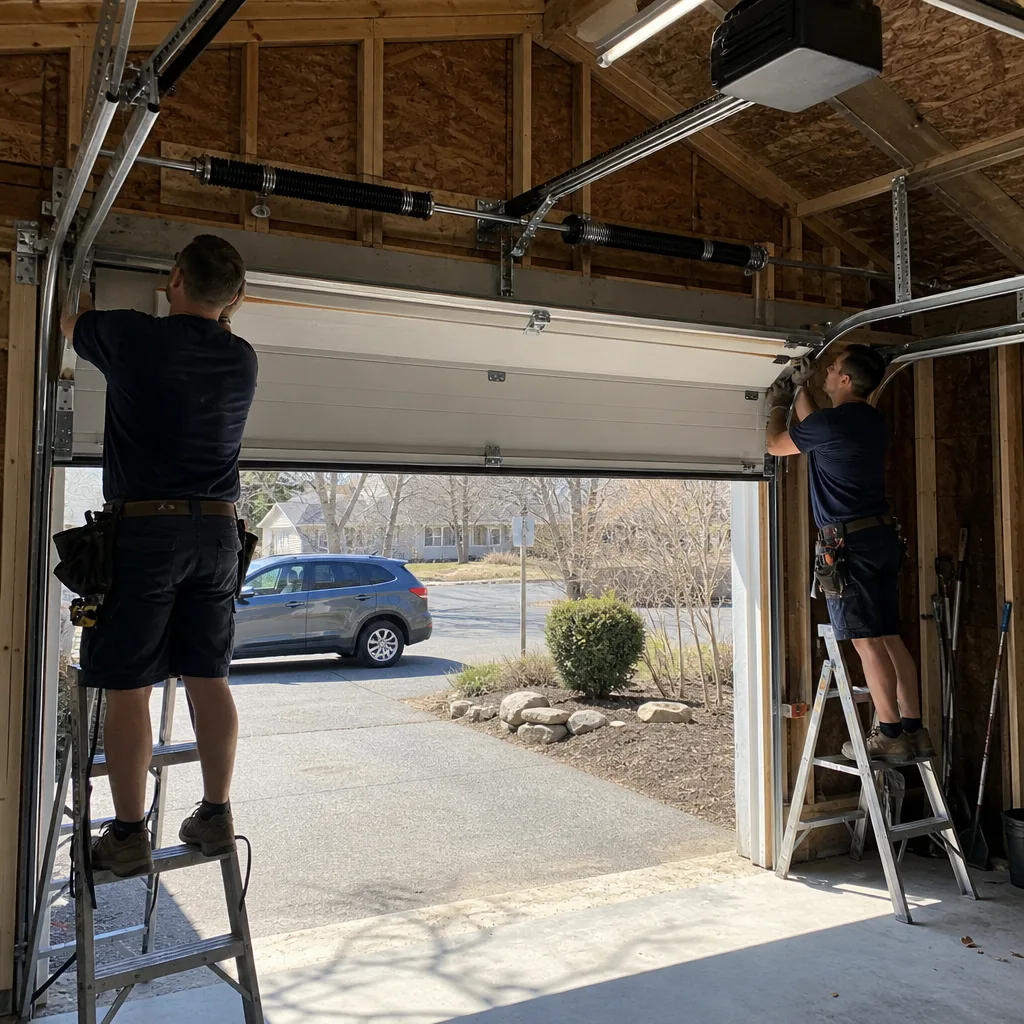
Last updated November 15, 2026
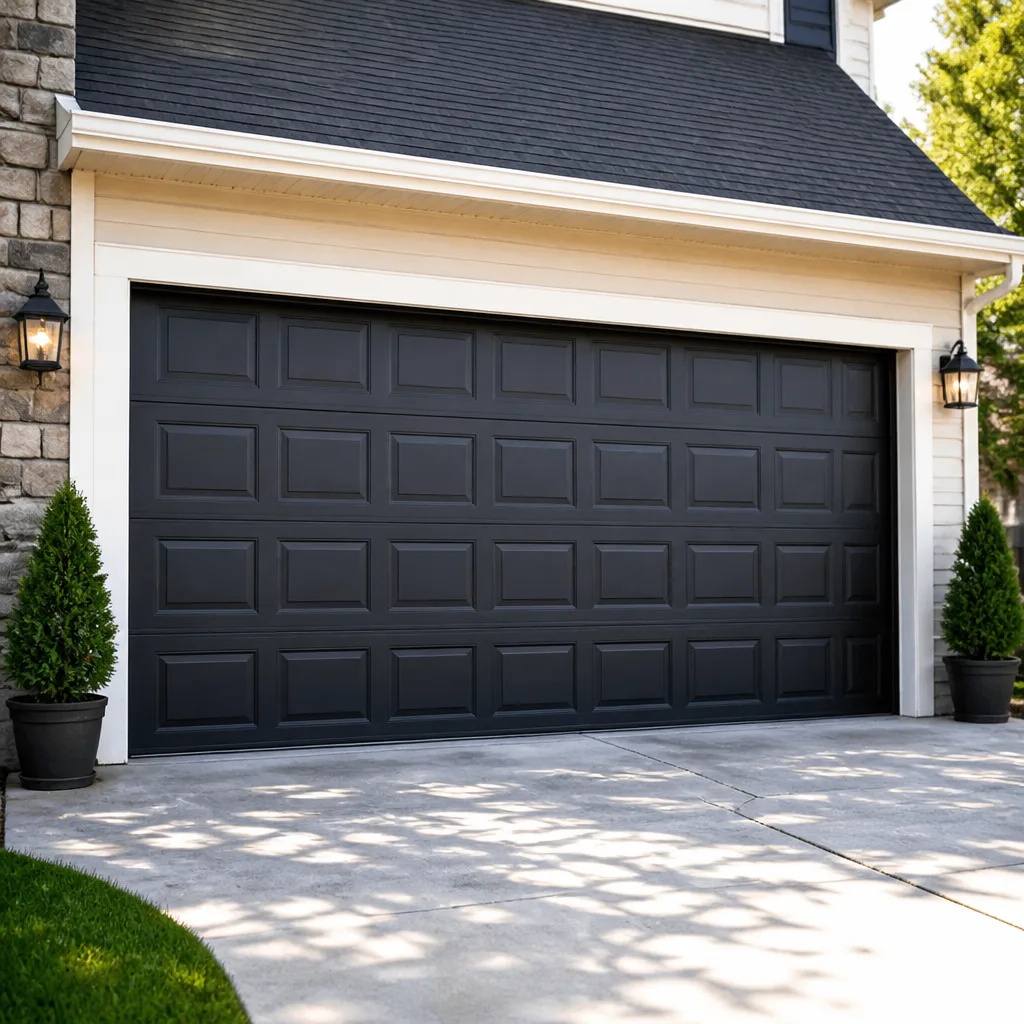 Raised-panel steel
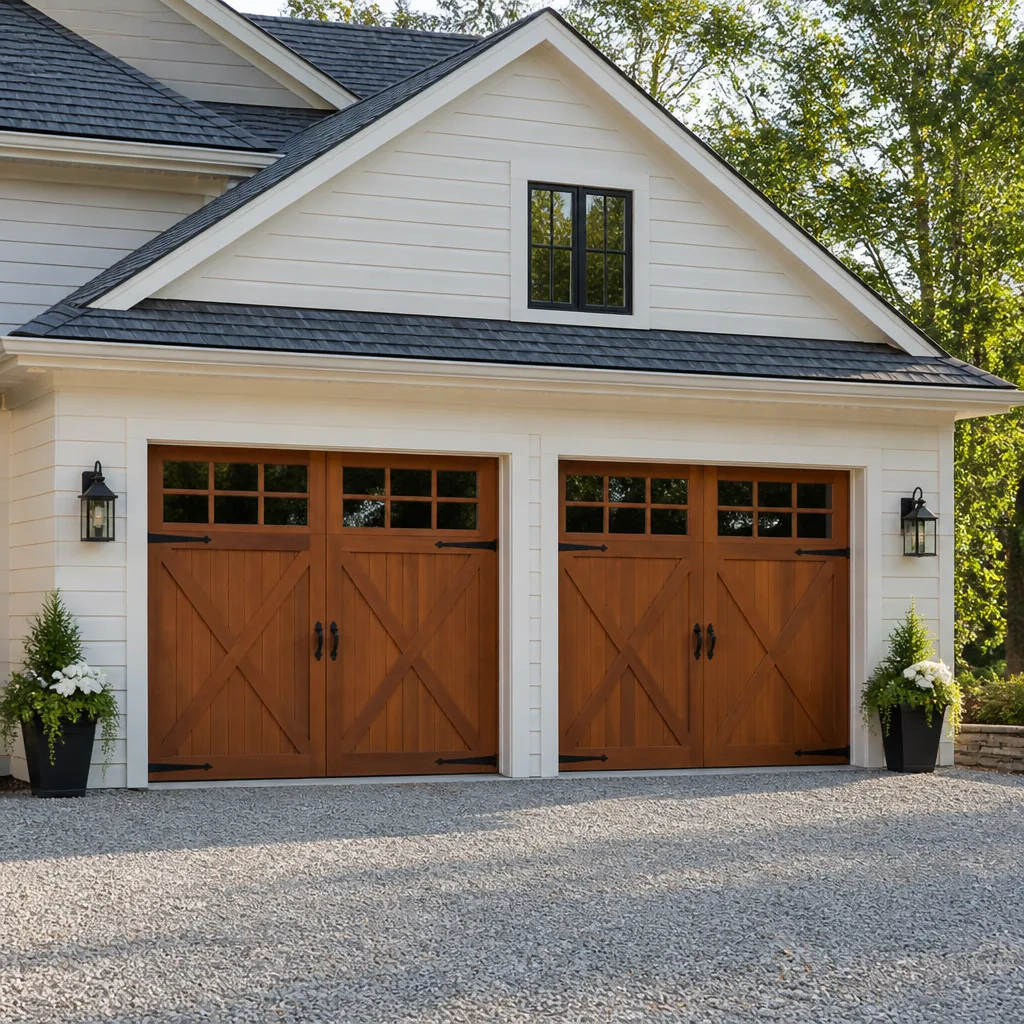 Carriage house
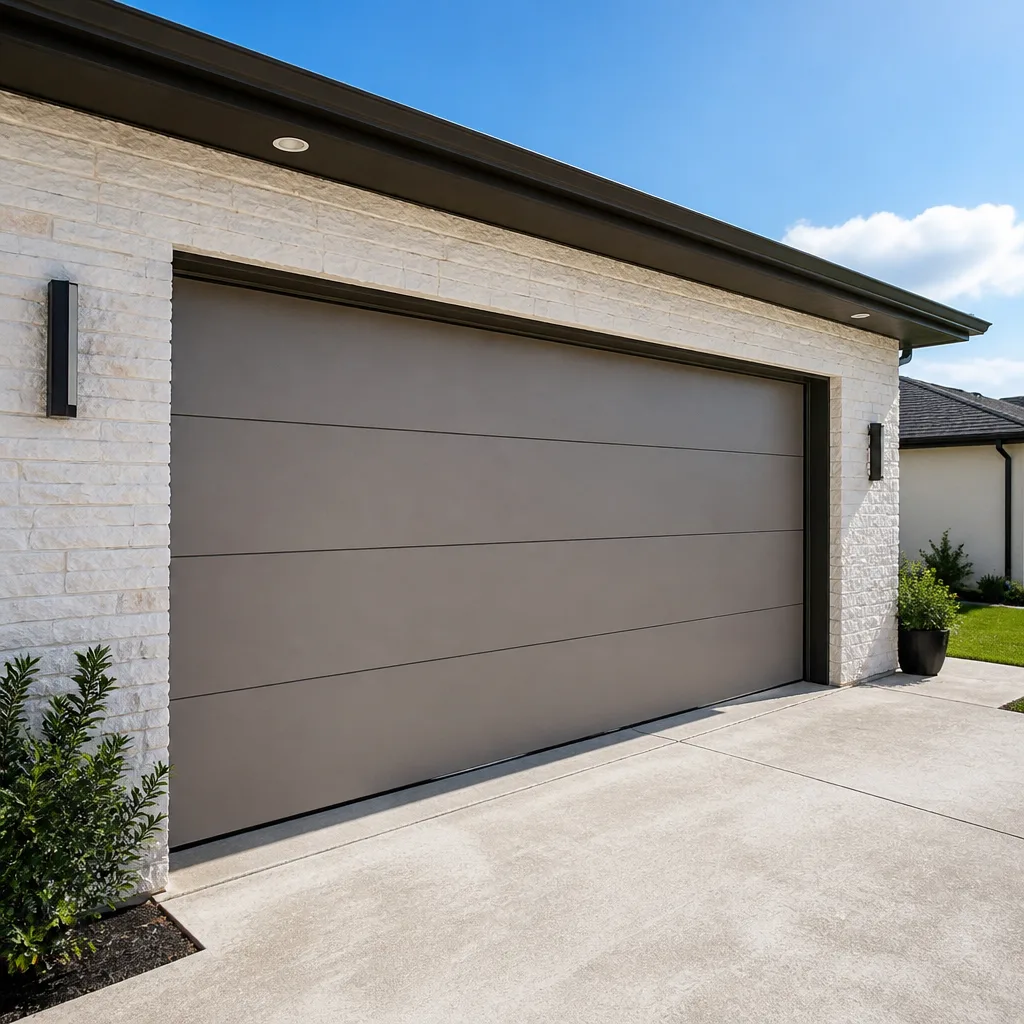 Modern flush
 Full-view glass
 LiftMaster openers
 Chamberlain openers
Full 25-point door and opener safety check with every visit - springs, cables, rollers, tracks, and your LiftMaster or Chamberlain opener included
You get a price before we start. It does not change when the pro arrives.
Get your free estimateGarage Door Repair Maintenance Schedule: What to Do and When
If you lubricated your garage door hinges in July, you did it at the wrong time. The month you do it matters almost as much as doing it at all. In Providence, the calendar that eats garage door hardware runs from the first hard freeze through mud season to the sticky stretch in August, and each season attacks a different part of the system. A schedule built for a mild climate misses the point here. What follows is a Providence-specific maintenance sequence built around what actually fails, and when. You’ll learn which tasks belong in September, which wait for March, what to log, and how to tell when a component is due for replacement instead of another adjustment.
Styles & brands we work with
- Raised-panel steel
- Carriage house
- Modern flush
- Full-view glass
- LiftMaster openers
- Chamberlain openers
Quick Answer
Service your garage door twice a year: once in late September before the first freeze and once in March after the thaw, with a light inspection whenever the seasons turn. At each pass, test the balance and the safety reverse, clean and lubricate the rollers and hinges, and check the springs, cables, and bottom seal for wear. Avoid lubricating the tracks or the bottom seal. Most of the work takes 20 minutes; anything involving springs or cables should go to a trained technician.
Table of Contents
- Why Timing Matters More Than the Task List
- The Fall Pass: Getting Ready for the First Freeze
- Winter: What to Watch and What Not to Touch
- The Spring Pass: After the Thaw
- Summer: Humidity, Wood, and Seals
- Lubricate These, Never Those
- The 10-Second Balance Test and What It Tells You
- Component Lifespan: When to Start Watching
- What to Log After Each Pass
- Common Mistakes to Avoid
- When to Call a Professional
- Frequently Asked Questions
- The Bottom Line
Why Timing Matters More Than the Task List
A garage door maintenance schedule isn’t about doing tasks on a calendar. It’s about doing the right tasks in the right order before New England weather forces your hand. The same lubrication that protects a hinge in October will attract grit and gum up a track in July if you apply it to the wrong surface. The same inspection that catches a fraying cable in March might miss it entirely in November, because the freeze hasn’t stressed it yet.
Most garage door failures we see across Providence follow a seasonal pattern. Metal contracts in the cold. Springs that were carrying their rated load in September can snap on the first 20-degree morning because the steel has become less ductile. Wooden door sections swell with summer humidity and shrink when the heat comes on, which moves the hardware and loosens fasteners. Bottom seals harden and crack through repeated freeze-thaw cycles and then let in water that freezes the door to the slab.
That’s the argument for a two-pass schedule rather than a monthly one. Twice a year, timed to the seasons, catches the parts that are failing before they fail completely. The monthly quick look fills in the gaps.
What a Maintenance Pass Is and Isn’t
A maintenance pass is a visual inspection, a balance test, a safety sensor test, cleaning, lubrication on the correct points only, and a fastener check. It is not spring replacement, cable replacement, or opener disassembly. Those tasks belong to a trained technician, and one of them can put you in the emergency room if you attempt it. We’ll say that plainly more than once, because it matters.
The Fall Pass: Getting Ready for the First Freeze
Do this in late September or early October, before the first hard freeze. The goal is to make the door survive the coldest stretch of the year with the least stress on its springs, cables, and weather seal. A door that goes into winter stiff and out of balance is the one that breaks something in January.
- Test the balance. Disconnect the opener and lift the door halfway by hand. It should hold there. If it drops, the spring tension is no longer matching the door’s weight, and a technician should adjust it before the cold makes the springs more brittle.
- Test the safety reverse. Place a 2×4 flat on the slab and close the door. It should stop and reverse on contact. If it doesn’t, the opener’s force and travel limits need attention before winter.
- Check the bottom seal. Run your hand along the rubber seal at the base. If it’s cracked, stiff, or pulling away, replace it. A failed seal lets meltwater under the door, where it refreezes and can freeze the door to the concrete.
- Lubricate the rollers, hinges, and the top of the torsion spring with a spray lubricant made for garage door hardware. Wipe away the excess.
- Inspect the cables and springs visually. Look for frayed strands on the cables and gaps or winding irregularities on the springs. Don’t touch either. Note what you see and hand it to a technician.
- Tighten loose bolts on the hinges and roller brackets with a socket wrench. Don’t overtighten; the metal has tolerances.
If you’re in the older parts of Providence where garages sit tight against the house and the door faces a narrow alley or a shared driveway, this fall pass is worth extra attention. A door that won’t close cleanly in a tight space creates a security gap that lasts all winter.
Winter: What to Watch and What Not to Touch
Winter is not the season to adjust anything. It’s the season to watch, and the season to clear the door path after a snow or ice event. The springs are at their most brittle in the cold. Opening and closing a door every morning with a stiff mechanism puts stress on the entire system, and any manual adjustment you attempt will be made on cold metal that behaves differently than it does in June.
Here’s what to watch for between passes:
- Jerky or uneven travel. A door that hesitates on one side may have a failing roller or a spring losing tension. Note when it happens and how often.
- Loud noises. Creaking is usually a lubrication or fastener issue. A sharp pop or a drum roll of slack is different, and it means stop using the door and call.
- The door freezing shut. If the bottom seal has failed, meltwater runs under the door, refreezes overnight, and binds the door to the slab. Don’t force the opener. Break the bond gently, then plan for a new seal on the spring pass.
- Grinding from the opener. Cold grease is stiffer, so a little more noise from the opener drive is normal. A grinding sound that wasn’t there before isn’t normal. Turn the opener off at the wall and have it looked at.
We answer 24/7 if something fails on a cold morning. Fast dispatch from 7am to 7pm, Sunday through Friday. If a door fails on a Saturday, we’re closed that day, but we’ll book you into Sunday.
The Spring Pass: After the Thaw
Do this in March, once the ground has thawed and the freeze-thaw cycle has settled. Winter is the most demanding season on the system, and March is when you take stock of the damage. This pass is more diagnostic than the fall one. The goal is to find the parts that winter stressed and decide which ones are due for replacement.
- Repeat the balance test. A door that passed in October and drops now is telling you something about the springs. Don’t adjust the openers to compensate; that masks the problem and wears the motor faster.
- Inspect the bottom seal again. The spring pass is the right time to replace it if the winter cracked or stiffened the rubber.
- Clean the tracks. Wipe the inside faces of the vertical and horizontal tracks with a damp cloth, then dry them. Do not spray anything into the track. Grit and old grease are what make doors noisy, and adding more lubricant makes it worse.
- Check the rollers for flat spots. Nylon rollers last longer than steel ones, but either can develop flat spots from sitting on a track under a load. A roller with a flat spot is the most common source of a grinding sound.
- Look at the cable drums and the brackets. Rust along the bottom edge of the door panels is common in a humid climate, and the brackets that hold the tracks can loosen when wood moves. Tighten the fasteners and note any rust for repainting.
- Test the safety reverse and the sensor beam. Wave an object through the sensor beam while the door is closing. It should reverse every time.
In the older Providence neighborhoods, garages often sit under the house or behind a tight driveway, and the door hardware has been adjusted and readjusted by whoever happened to own the place. The spring pass is a good time to have a technician garage door repair professional look over anything you noted during the winter. One visit with a complete list of observations is more efficient than several visits for single issues.
Summer: Humidity, Wood, and Seals
Providence summers are humid, and humidity is the quiet enemy of a wooden garage door. Wood sections swell as they take on moisture, which moves the hardware, loosens hinges, and can make a door that ran smoothly in April drag in July. The swelling is temporary, but the loosened fasteners are not. If you hear a new rattle or the door sticks on one side, don’t assume the heat is the whole story. Tighten the hardware and check whether the door’s balance has changed.
The bottom seal is the other summer casualty. Heat softens the rubber, and a softened seal distorts and stops making contact. A seal that has lost its shape lets insects and water in and won’t keep the weather out in winter. The best time to replace it is before the fall pass, not after.
Summer is also the right time to check the opener’s built-in maintenance indicator. Many models from Genie and LiftMaster have a light or code that signals when a service is due. It’s a rough guide based on cycle count, but it’s a useful cross-check against your own records. We’ll come back to cycle counts in the lifespan section.
If you notice the door itself is a Clopay or Amarr steel door with wood-grain texture, look along the bottom edge for rust. The paint on the bottom section takes the most abuse from moisture and road splash. A spot of rust that spreads can lead to panel replacement instead of paint repair, so touch it up before it does.
Lubricate These, Never Those
This is the distinction most homeowners get wrong, and some handymen get wrong too. Lubricant protects metal-on-metal contact. Applied to a surface that relies on friction or grip, it causes problems.
Lubricate These
- Rollers and roller stems. A light spray is enough. Don’t drench them.
- Hinges. Spray the hinge pivot points, not the whole plate.
- The top of a torsion spring. A quick pass along the coil reduces friction as the spring winds and unwinds. Don’t touch the springs otherwise.
- The opener arm and the rail where the trolley travels. Less is more here; a little lubricant on the moving contact points keeps the trolley running quietly.
Never Lubricate These
- The tracks. The door’s rollers are designed to run on clean, dry tracks. Lubricant in the track captures grit and turns it into an abrasive paste. Clean the tracks with a damp cloth and leave them dry.
- The bottom seal. The seal needs to grip the slab to do its job. Lubricant makes it slide and lets water and air in.
- The opener belt or chain drive (unless the manufacturer specifies otherwise). Most belt and chain drives are designed to run dry or come pre-lubricated. Check your opener’s documentation, or ask a technician who knows the model before you spray anything.
In our experience, the calls that turn out to be “the door is noisy and slow” are often caused by over-lubrication rather than under-lubrication. The track is full of old grease and grit, and the rollers are fighting it. A clean track and a light spray in the right spots fixes more noisy doors than any product on the shelf.
The 10-Second Balance Test and What It Tells You
The balance test is the fastest diagnostic you can run on a garage door, and it takes about ten seconds. Here’s how it works. Disconnect the opener (there’s usually a release cord or lever), lift the door by hand to about waist height, and let go. A properly balanced door holds its position. A door that drifts down more than about two inches is out of balance, and that drift is a symptom of a spring that’s no longer carrying the door’s weight.
Why two inches? A small drift can be normal on a cold day. A drift of more than a couple of inches means the spring tension is measurably out of step with the door, and the opener is now doing work the spring should be doing. That’s the part most homeowners miss: an out-of-balance door doesn’t just feel heavy, it loads the opener motor on every cycle. The motor is designed to move the door, not to lift it against gravity alone. Every cycle spent lifting too much weight shortens the life of the opener’s drive components.
What the Test Results Mean
- Holds position or drifts less than two inches: balanced. No action needed.
- Drifts two to six inches: spring tension is off. Book a technician to adjust it before the load wears the opener.
- Drops quickly or won’t stay up: the spring has failed or is close to it. Stop using the opener and call. Don’t try to adjust the spring yourself.
Reconnect the opener and run the door through a full cycle after the test. If the opener struggles to lift the door, the balance issue is confirmed. The fix is a spring adjustment, not a new opener, and a technician can tell the difference.
Component Lifespan: When to Start Watching
Garage door components wear on a schedule measured in cycles, not years. A cycle is one full open and close. A door used by a single household typically sees three to five cycles a day, which adds up to roughly 1,000 to 1,800 cycles a year. A door used heavily, with two cars and kids going in and out, may double that. Spring life is rated in cycles by the manufacturer, and the rated range varies by spring size and material. A standard torsion spring might be rated for 10,000 cycles, a higher-cycle spring for 20,000 or more. Your door’s actual spring is the only reliable guide, and a technician can tell you its rating from the wire size and length.
Springs
Start watching the springs when the door is around ten years old, and sooner if your cycle count is high. Watch for a door that drifts in the balance test, a visible gap in the coil, or a thumping sound as the door runs. Torsion and extension springs both fatigue over time and eventually break, usually at a moment of maximum load: the first cold morning, or the day after a long trip when the door sat closed for a week. There’s rarely a gradual failure.
Opener Drive Components
Opener gears, belts, and drive sprockets typically last eight to twelve years, depending on the model and the load it’s been asked to carry. An opener that has been compensating for a weak spring works harder, so a balanced door extends opener life. The first signs of drive wear are usually a new grinding or rattling sound, or the door stalling partway through a cycle. If you see those and the balance test is clean, the opener is the place to look.
Cables
Cables are the part people forget until they snap. A cable is under constant tension, and a frayed strand is the warning. Look for broken wires poking out of the cable jacket, rust streaks along the cable, or a drum that’s winding unevenly. Cables are rated to last roughly as long as the springs, and they’re replaced in pairs for a reason. If one is frayed, the other is close behind.
Rollers, Hinges, and Seals
Nylon rollers often last five to seven years; steel rollers can last longer but run noisier. Hinges last as long as the door’s hardware holds up, though they loosen faster on a wooden door. The bottom seal is the shortest-lived part on the whole system, and in Providence’s freeze-thaw climate it’s often replaced every four to six years.
When any of these components reach the end of their life, that’s where a technician’s brand familiarity saves time. A technician who works regularly with Genie and Clopay systems won’t spend a diagnostic visit learning your door. They’ll recognize the model, know the replacement part, and get the fix right the first time. That’s the difference between a repair and a return visit.
What to Log After Each Pass
The single most useful habit in garage door maintenance is a one-minute log. After every pass, write down the date, the balance test result, anything you lubricated, anything you tightened, and anything that looked worn. Keep it in a note on your phone or taped to the inside of the garage door. It doesn’t have to be elaborate.
The log pays off at the next technician visit. Instead of starting from zero and running diagnostics to figure out what the door is doing, a technician can read the record, see that the door has been drifting for three passes, and know that the spring is the issue. That saves a diagnostic visit’s worth of time, and it means fewer repeat visits for the same problem. It also protects you at resale: a maintenance record with dates and observations is a small but real selling point for a home with an older garage.
What to Include
- Date of the pass, and the number of cycles the door has seen since the last one (estimate if you don’t have a counter).
- Balance test result: held, drifted, or dropped.
- Safety reverse test result: reversed or failed.
- What you lubricated, and where.
- Anything you tightened, and anything that looked worn.
- Any new sound, hesitation, or sensor issue.
When you call for the next service, read the log. It’s the fastest way to get a right-size fix instead of a guess.
Common Mistakes to Avoid
- Lubricating the tracks. It’s the most common mistake we see. Lubricant in the track turns grit into an abrasive paste that wears the rollers and makes the door noisier, not quieter. Clean and dry the tracks instead.
- Lubricating the bottom seal. The seal is supposed to grip the slab and keep water out. A lubricated seal slides and lets the weather in, which is a real problem in Providence’s freeze-thaw winters.
- Adjusting the opener’s force settings to compensate for an out-of-balance door. This masks a spring problem and makes the motor work harder on every cycle. Fix the balance, not the symptom.
- Ignoring a door that drifts in the balance test. A drift of more than two inches means the spring is no longer carrying the door. Waiting until it fails leaves you with a door that won’t open and a call you didn’t plan for.
- Doing a fall pass in the summer. Lubricating hinges and the spring top in July means they’ve collected grit and lost their protection by the time the cold arrives. Time the pass to the seasons, not the mood.
- Never checking the bottom seal. It’s the shortest-lived part on the system and the one most likely to cause a frozen door. Check it every pass.
- Tightening bolts with a heavy hand. Over-tightening brackets and hinges can strip threads and warp the metal. They should be snug, not cranked down.
When to Call a Professional
Some jobs belong to a trained technician, full stop. If the balance test shows a drift of more than two inches, if a spring has broken, or if a cable is frayed or visibly damaged, stop using the door and call. Don’t attempt to adjust spring tension, and don’t try to replace a torsion spring or a cable. Those are the tasks with the most serious injury risk in this trade, and they’re not a weekend project. The same goes for opener drive failures and sensor problems you can’t trace to a simple alignment fix.
If you’ve run both passes, kept the log, and the door is still jerky, noisy, or out of balance, that’s the point to hand it to a technician. Eastwood Garage Door Service offers free estimates in Providence. We work on what’s already in your garage and recognize the door and opener systems homeowners have installed here, so the visit starts with a diagnosis and not a discovery. Call (855) 613-2822. We answer 24/7. Fast dispatch from 7am to 7pm, Sunday through Friday.
Our technicians have up to 11 years of experience, and we handle the full system: the door, the opener, and the drive components. If you’re at the point where a new door makes more sense than another repair, we also install doors, and we can walk you through the options across brands rather than steering you toward one manufacturer’s line.
Frequently Asked Questions
Twice a year: once in late September before the first freeze and once in March after the thaw. These two passes catch the parts that the Providence climate stresses hardest, and a quick monthly look fills in the gaps. Call (855) 613-2822 for an exact quote on any repair – estimates are free.
A light spray on the top of a torsion spring, with the door closed, is safe for most homeowners. Do not attempt to adjust, remove, or replace a spring. That’s the part of the system with the highest injury risk, and it’s a job for a trained technician. If you’re unsure, leave it to a professional.
A door that drifts more than about two inches in the balance test is out of balance, which usually means the spring tension no longer matches the door’s weight. It’s not an emergency, but it loads the opener motor on every cycle and should be corrected. Call (855) 613-2822 to have it checked – estimates are free.
We’re closed Saturday and open Sunday through Friday, 7am to 7pm. If you’re booking a maintenance pass or a repair, call (855) 613-2822 and we’ll find the next opening in that window.
Watch for a door that drifts in the balance test, a visible gap in the coil, or a thumping sound as the door runs. Springs are rated in cycles, not years, so a heavily used door can reach its rated cycles well before an older door used less often. A technician can identify the rating of your door’s spring and tell you where it stands.
First, clean the tracks with a dry cloth and check for flat spots on the rollers. If the grinding continues, it’s likely coming from the opener drive or a failing bearing, and the door should be inspected by a technician. Don’t adjust the opener to compensate. Call (855) 613-2822 for a diagnosis, and estimates are free.
The Bottom Line
A garage door maintenance schedule isn’t a list of tasks done on a fixed calendar. It’s a seasonal sequence built around what actually fails in Providence, and when. Do the fall pass before the first freeze, watch through winter, run the spring pass after the thaw, and check the humid-season parts in summer. Lubricate the moving metal and leave the tracks and the bottom seal dry. Run the ten-second balance test at every pass, keep a one-minute log, and know the difference between a component you can maintain and a component only a technician should touch. Two passes a year and a short record will catch most failures before they stranding you with a door that won’t open. For anything you’d rather hand off, call Eastwood Garage Door Service at (855) 613-2822 for a free estimate. Our technicians have up to 11 years of experience, and we work on the brands you already have, including Genie, Clopay, Amarr, and Wayne Dalton systems. If the opener is the part that’s giving you trouble, we can take a look at that too.
Written by the team at Eastwood Garage Door Service.
See the difference
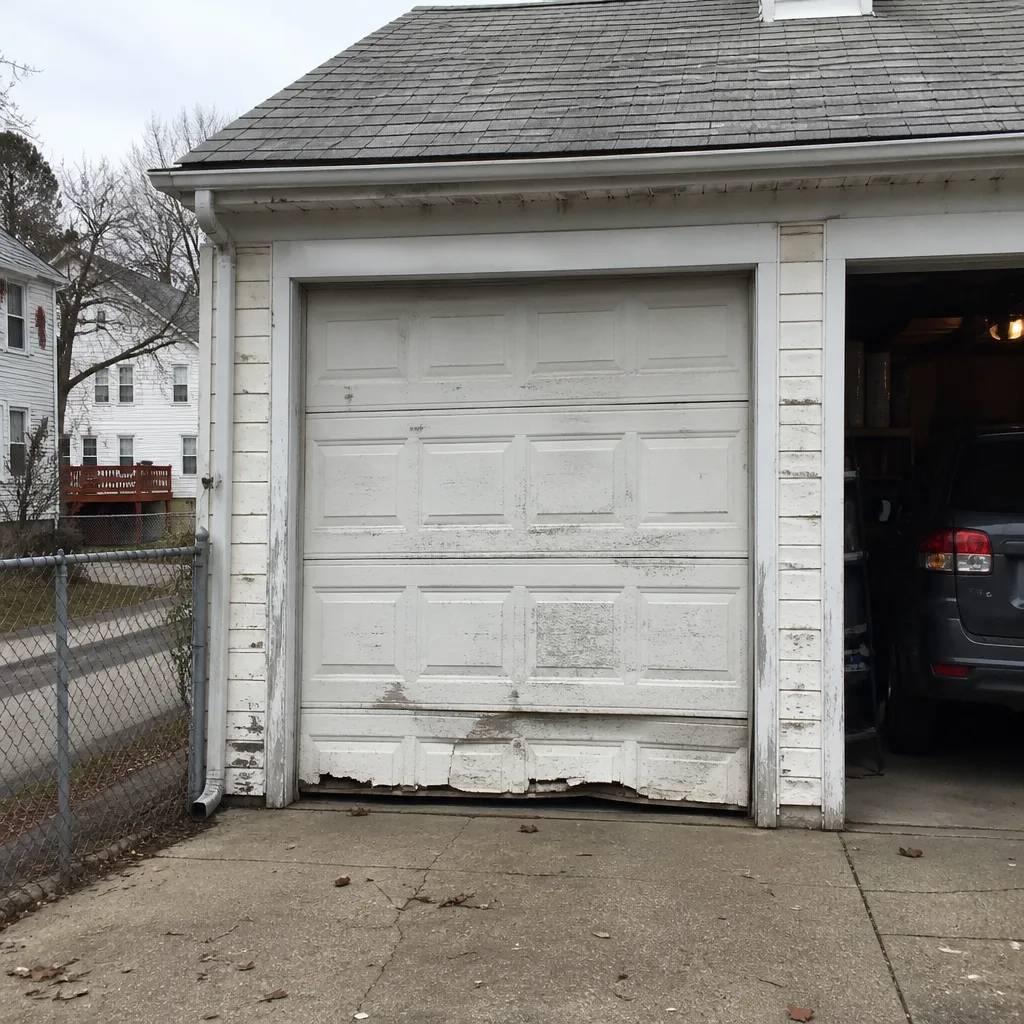 Before
 After
 Before
 After
 Before
 After